Choose timezone
Your profile timezone:
Single Sign-On since June 2026



Thanks for participating in the 2nd OpenSense conference! The book of abstracts is available here.
58 face-2-face participants
~22 online participants
15 posters
27 orals
3 keynotes
1 panel discussion
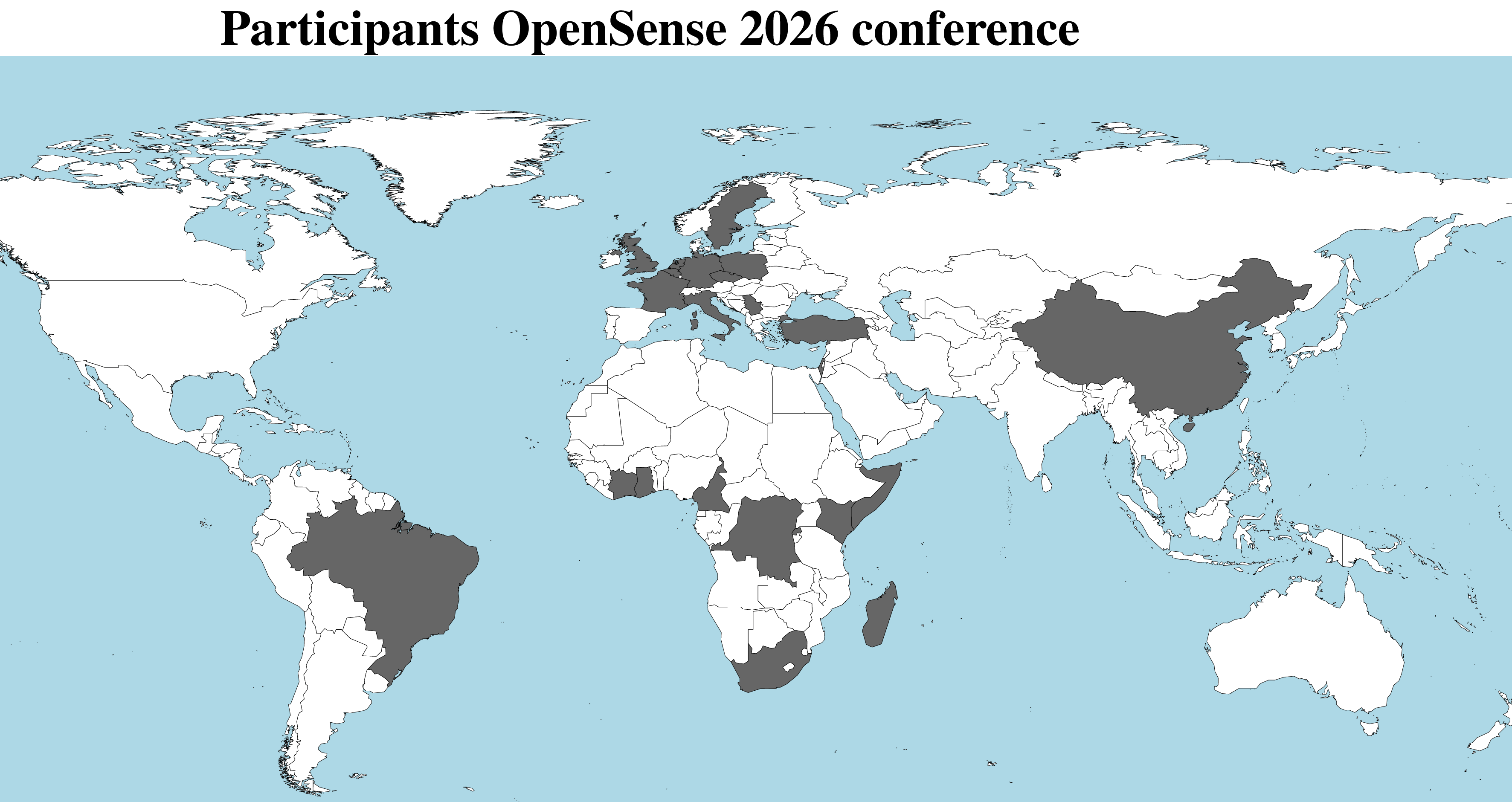

The second International Conference on Opportunistic Sensing of Precipitation was held at the Royal Netherlands Meteorological Institute, De Bilt, the Netherlands, on 23 and 24 June 2026. It was organised by the Royal Netherlands Meteorological Institute and Delft University of Technology.
This conference series started in 2025 as the final conference of the European COST Action CA20136 OpenSense, that was held at the German Weather Service, Offenbach, Germany, on 25 and 26 June 2025.
What was OpenSense?
OpenSense aimed to improve access to continental OS (opportunistic sensing) observations, establish OS as a widely acknowledged method capable of providing reliable operational precipitation observations, and facilitate their use in precipitation nowcasting and operational hydrological forecasts. Check out this video!
The COST action OpenSense has come to an end in October 2025, but the community and network remains alive. For instance, open-source software tools have been expanded or newly developed within OpenSense and are actively used and developed. Moreover, the COST Innovators Grant SetGMDI, Setting up the Global Microwave link Data collection Initiative for hydrometeorological applications, is a 1-year spin-off of OpenSense and will run through October 2026. It focusses on commercial microwave link data, one of the main opportunistic sensors in OpenSense.
Agenda
On Monday 22 June 2026, there will be a 1-day SetGMDI meeting (for invited SetGMDI members only; costs are approximately EUR 25 per person to be paid by card on-site for coffee breaks and lunch; cash money will not be accepted). The conference will take place on Tuesday and Wednesday, and is open to all interested in opportunistic sensing of rainfall, e.g., commercial microwave links (CMLs), personal weather stations (PWSs), and satellite microwave links (SMLs). There are no registration costs, but costs for coffee breaks, lunch and one drinks are at your own expense (one fixed amount for all participants).
For more details on the sessions, check the Scientific Topics (to be determined).
The presentation guidelines are available here.
A fee of approximately EUR 75 is to be paid by card on-site at registration desk to cover coffee breaks, lunches and one social drinks (cash money will not be accepted).
The tentative timeline until the conference
| 9 Dec 2025 | Call for abstracts |
| Abstract submission deadline | |
| 17 April 2026 |
Letter of Acceptance Registration opens |
|
Registration deadline |
|
| 23 & 24 June 2026 | Conference |
Introduction to KNMI, OpenSense and conference series. Opening by KNMI director Ellen Verolme.
Since 2014 when the first conference on Rain Measurement from Cellular Phone Network in Africa was held in Burkina Faso, our group at IRD (Institut de Recherche pour le Developpement) with partners from University of Abidjan in Ivory coast and Douala in Cameroon, has carried on developing (or trying to develop) pilot experiments in different countries, Niger, Cameroon, Ivory Coast and more recently Madagascar and with different telecom operators with various degree of success both in terms of technical/scientific outcome and contractual/operational perspective levels.
In this talk we would like to review the quantitative results that could be obtained in terms of rain detection/estimation across the sites -in a context of scarce in situ data for validation- and also draw a more general SWOT (Strengths/Weaknesses/Opportunities/Threats) synthesis of what was learnt and how new perspectives (such as GMDI project) will help.
Automated quality control (QC) of rainfall measurements from sparse networks, such as the Trans-African Hydro-Meteorological Observatory (TAHMO), is challenging due to environmental faults like persistent clogging and mechanical spikes. Traditional QC algorithms rely heavily on spatial cross-validation with neighboring gauges; however, this approach fails in these regions where spatial correlation is weak. While recent studies have demonstrated the viability of Commercial Microwave Links (CMLs) as opportunistic sensors for rainfall estimation, their integration into automated gauge auditing frameworks remains underexplored.
To bridge this gap, this study introduces an observer-based fault detection framework utilizing a decoupled, two-stage architecture to validate ground stations. In the first stage, a constrained Luenberger Observer acts as a dynamic state estimator to generate a highly stable virtual sensor. Operating within a 3-month rainy season window dictated by current data availability, the system fuses pre-processed, localized gridded CML rainfall maps with hourly multivariate ERA5 weather variables (Total Column Water Vapour, surface solar radiation downwards, 2m temperature, 2m dew temperature, Total Cloud Cover, and Boundary Layer Height) downscaled to 5-minute resolution via shape-preserving PCHIP interpolation in Ouagadougou, Burkina Faso, using bilinear interpolation to resolve spatial mismatches. To mitigate the CML Wet Antenna Effect, radome drying is modeled as a first-order lag system (τ=14.52 minutes) to build an inverse lead compensator. Using system identification via multiple linear regression, we capture highly accurate atmospheric dynamics (R²=0.793), deriving convective persistence (A≈0.621) and environmental forcings, while the optimal Kalman gain (L≈0.228) is extracted via the steady-state Riccati equation.
Because linear observers struggle with non-stationary environmental variance, the second stage introduces a diagnostic decision engine. Operating on the observer’s innovation residuals, this state-machine uses a 5x baseline noise gate and an asymmetric decay memory to isolate faults, while autonomously self-healing during natural correlation gaps.
Validation via synthetic fault injection over a 3-month rainy season demonstrated fail-safe resilience. The optimally tuned model achieved 91% overall accuracy, maintaining perfect detection for transient spikes (Precision and Recall of 1.00) while successfully isolating 90% of persistent clogs. By drastically reducing false positives, this framework proves the viability of utilizing opportunistic sensing as a highly reliable, automated auditing tool, paving the way for scalable QC across Africa.
Accurate and continuous rainfall measurements remain a challenging task, particularly in regions with sparse ground-based observations. In recent years, opportunistic approaches have emerged as a means of improving precipitation monitoring. In this study, we adapt a methodology originally developed for rainfall detection using Commercial Microwave Links to a framework based on passive acoustic recorders. Our approach consists of obtaining a dry-weather baseline of the acoustic Power Spectral Density (PSD) for a given environment. Audio spectra are then normalized and integrated (mean) over a selected frequency band, followed by a percentile-based approach for rainfall detection. We evaluated the method across datasets from tropical (Brazil and Côte d’Ivoire) and temperate (France) regions. Sensitivity tests yielded two distinct frequency bands suitable for rainfall monitoring: 0.2-0.5 kHz for tropical regions and 3.2-3.5 kHz for temperate regions. The main sources of error are associated with wind, technophonic, and biophonic interference. Results demonstrate strong temporal coherence between our method and rainfall rate (mm/5 min), with a mean correlation of 0.7 across all sites and values approaching 0.9 in best-case scenarios, with rainfall detection errors of approximately 0.02. Although further work is needed to improve background noise filtering, our proposed approach provides potential for a low-cost, scalable complement to established monitoring systems, including satellite rainfall products.
Rainfall retrievals from commercial microwave links (CMLs) have become a valuable complement to conventional rainfall sensors, especially in the Global South where weather radar and rain gauge networks remain sparse. However, CML coverage is limited over inaccessible and in rural regions, thereby limiting their applicability for short-term forecasting and flood early warning. Satellites do offer global coverage, but face challenges as accurate retrieval of surface-level precipitation and limited detection of low-intensity rainfall. In this study, we compare CML-derived rainfall estimates with those obtained from the passive microwave radiometer aboard the Global Precipitation Measurement (GPM) Core Observatory across multiple countries with contrasting climates (Netherlands, Sri Lanka, Nigeria). The dual-frequency precipitation radar onboard GPM, providing collocated observations with the onboard radiometer, serves as a consistent reference dataset across all three countries. In addition, over the Netherlands, a high-quality, high-resolution gauge-adjusted radar precipitation dataset is employed as a supplementary reference.
By conducting statistical evaluations at 15-minute temporal resolution, this study provides new insights into the performance of CML-derived rainfall estimates across three distinct regions. The error characteristics of CMLs and satellite radiometers are shown to be complementary. Radiometer-based estimates systematically underestimate high-intensity precipitation, with relative biases ranging between −10% and −50% depending on the study region and the rainfall detection threshold. Conversely, CML retrievals exhibit reduced sensitivity to low-intensity events, with probabilities of detection (POD) between 0.1 (Nigeria) and 0.5 (the Netherlands).
Over the past two decades, the use of Commercial Microwave Links (CMLs) as opportunistic rainfall sensors has evolved from proof-of-concept studies involving a limited number of links to the production of multi-year, country-wide rainfall maps. Despite this progress, (near-real time) operational applications of CML-derived rainfall products remain largely confined to pilot studies. Moreover, most applications have been concentrated in Western Europe, where dedicated ground-based rainfall monitoring networks (rain gauges, weather radars) already provide good coverage.
In this presentation, we introduce a unique initiative that addresses both limitations by developing a real-time weather application for Ghana. The product integrates rainfall information from CMLs, METEOSAT geostationary satellites, and rain gauges from the Ghana Meteorological Agency (GMet) and the Trans-African Hydro-Meteorological Observatory (TAHMO). This effort represents a collaboration between partners from industry (Rainboo B.V.), a mobile network operator (Airtel-Tigo Ghana), research institute (TU Delft), and TAHMO. We present both the organizational aspect of setting up a continuous operational data stream and some preliminary results of the merged rainfall product.
Particular emphasis is placed on the calibration of CML-based rainfall retrievals within this merged product. We identify the most suitable (pre-)processing steps with regards to the available reference rain gauge data and the subsequent merging with the satellite rainfall product. In addition, the CML retrieval algorithm is adapted to local climatological conditions using empirical drop size distributions collected in Ghana. Finally, we share the learnings, the challenges and opportunities of using CML data as a source of information in real-time rainfall monitoring and weather services in data-scarce tropical regions.
The difficulty of deploying dense networks of rain gauges in urban areas due to installation and maintenance costs, as well as the spatial structure of cities, particularly in Africa, makes it challenging to monitor the impact of extreme rainfall events. Flood risk management and urban hydrological modeling require accurate information on the spatial and temporal distribution of precipitation.
This study presents a rather unique and innovative experimental device in Sub-Saharan Africa which, in addition to some twenty rain gauges, disdrometers, and limnimeters, combines three opportunistic rain measurement technologies: commercial microwave links (CMLs) from mobile phone networks, satellite-to-ground microwave links (SMLs) from television satellites, and acoustic sensors that measure rainfall based on the sound generated by raindrops falling on a given surface. Previous studies have demonstrated the effectiveness of these opportunistic systems for detecting and estimating rainfall based on the attenuation of the microwave signal by raindrops.
After describing this unique observation network, our analysis shows the contribution of opportunistic measurements in general for a city like Abidjan, which is prone to annual flooding, and CMLs in particular through hydrological modeling already evaluated on SMLs.
Keywords: RainCell, CMLs, SMLs, sounds, urban hydrology, West Africa
Merged weather radar and rain‑gauge products provide the state‑of‑the‑art quantitative precipitation estimation (QPE) from national meteorological services for many hydrometeorological applications. They combine the high spatio‑temporal coverage of weather radar with the point‑scale accuracy of rain gauges to mitigate each instrument’s specific uncertainties, namely the indirect measurement high above ground from radars and limited spatial representativeness from rain gauges. Nevertheless, these products are far from perfect. They inherit observational errors from both sources and add uncertainty through the merging procedure.
One straightforward approach to reduce uncertainty is to increase the number of adjustment sensors. Private weather stations (PWS) are a promising source. We use rainfall observations from Netatmo devices in Germany from 2020 and 2025. Depending on the year, there are roughly 10–30 times more PWS reporting rainfall than the professional rain gauges operated by Deutscher Wetterdienst and partner networks in Germany.
In this contribution we (1) evaluate quality‑control (QC) methods to improve PWS data quality, (2) compare rainfall statistics of PWS observations against collocated reference rain gauges, and (3) quantify the impact of including PWS in the radar–gauge merging process. As a reference dataset we use operational DWD products. The main result we present, is an evaluation of radar products adjusted with PWS data, as well as products that use both PWS and rain gauges, against operational radar–gauge products. We demonstrate how adding a large number of PWS changes radar‑adjusted QPE and discuss the advantages and limitations of using them for real-time and climatological products.
Semi-distributed flood modelling requires an accurate representation of the spatial and temporal variability of rainfall. However, official rain-gauge networks often have limited spatial density and may fail to capture intense and localized rainfall events. Opportunistic rainfall sensors, such as personal weather stations (PWS), offer the potential to complement and enhance the spatial coverage of conventional rainfall observations. Nevertheless, heterogeneous data quality and continuously evolving network configurations pose significant challenges for hydrological modelling, given the high sensitivity of models to rainfall inputs. Therefore, the applicability of PWS rainfall data for semi-distributed modelling must be thoroughly evaluated.
In this study, twelve flood events in the Lambro basin (northern Italy) were simulated. Rainfall data from the Meteonetwork PWS platform were analysed alongside reference rain-gauge (RG) data provided by the Regional Environmental Protection Agency (ARPA) of the Lombardy Region. To evaluate the impact of PWS selection, several precipitation datasets were generated. In addition to the reference RG dataset, two groups of rainfall inputs were constructed:
(i) standalone PWS datasets, comprising: a) all available PWS observations (PWSall), b) quality-controlled PWS data (PWSqc), and c) quality-controlled PWS data from stations that were continuously active during all analysed storm events (PWSqc_c); and
(ii) combined datasets merging PWS and RG observations, denoted as e) RG+PWSall, f) RG+PWSqc, and g) RG+PWSqc_c, respectively.
Alternative rainfall inputs were generated using the inverse distance weighting (IDW) interpolation method. Rainfall hyetographs were compared at both the point scale, using RG observations as reference data (“ground truth”), and at the sub-basin scale. Their impact on hydrological modelling performance was evaluated through semi-distributed flood simulations conducted with a hydrological model previously developed by the authors of this contribution.
The results indicate that standalone PWS datasets, particularly those incorporating all available PWS observations without prior quality control, introduce substantial uncertainty in both rainfall representation and simulated flood hydrographs. The application of quality control procedures as well as the selection of continuously operating stations improve both rainfall hyetographs and model performance. The most accurate reproduction of flood hydrographs is achieved when quality-controlled PWS datasets (PWSqc and PWSqc_c) are combined with RG observations. These findings demonstrate that PWS can provide valuable complementary information to conventional monitoring networks. However, under current conditions, they cannot fully replace reference gauge networks under current conditions.
Acknowledgments
The authors would like to thank the COST Action “OpenSense” (CA20136) for supporting collaboration opportunities among the co-authors through the STSM program.
Accurate rainfall observations are key for several applications, such as nowcasting and hydrological forecasting. However, rainfall is highly variable in both space and time, resulting in significant uncertainties in areal rainfall products. Estimates of this spatial and temporal variability are needed for spatial interpolation and merging of rainfall products. Traditional rain gauge networks are often too sparse to resolve this variability. In this study, we make use of personal weather stations, a unique high-density rain gauge network with a high temporal resolution (i.e. 5-min) over a three-year period to quantify the spatial variability of rainfall over the whole of the Netherlands (about 1 gauge per 10km2). We investigated the spatial variability of rainfall at different temporal aggregation intervals by fitting climatological spherical semi-variograms, revealing a strong seasonal pattern. In addition, we examined the spatial dependency of rainfall in different directions to characterize anisotropy.
Small-scale convective storms are difficult to capture with conventional rain‑gauge networks because of limited spatial coverage. Weather radar provides spatially continuous observations but measures aloft with an intrinsic time lag relative to surface observations and carries uncertainties from the indirect measurement principle. For near‑real‑time rainfall analyses and climatological studies, precise spatio‑temporal localization of convective events is therefore crucial. These storms often occur in association with cold pools.
Cold pools are mesoscale (~30 km) air masses generated by evaporative cooling beneath thunderstorm clouds; they are typically marked by a local pressure rise and a temperature drop. In Germany during 2025, there are roughly 90,000 Netatmo private weather stations (PWS) reporting air pressure and potentially air temperature, with around 35,000 of them also measuring precipitation. Although PWS data do not meet professional‑network standards, their sheer spatial density offers an opportunity to detect cold pools at the surface and to complement radar observations.
This study aims to (1) detect characteristic cold‑pool signatures (local pressure increase and temperature decrease) in Netatmo PWS data, (2) validate these detections against radar datasets (Radklim, CatRaRE) and KONRAD3D thunderstorm tracks, and (3) discuss the potential of PWS‑based cold‑pool detection to support subsequent hydrometeorological applications. We apply automated quality control (QC) to PWS measurements (e.g., using the open‑source tool pypwsqc) before detection and validation, thus evaluating the performance of QC methods developed for PWS rainfall observation on other variables.
The benefit of using Commercial Microwave Links (CMLs) as opportunistic sensors for rainfall estimation is greatest in those regions that lack dedicated rainfall sensors, notably large parts of the tropics and mountainous areas. The lack of dedicated rainfall sensors, however, also means that for these regions calibration of CML rainfall retrieval algorithms is a challenge. The core of these retrieval algorithms is based on the near power law relation between rainfall intensity R and signal attenuation k through $R=ak^b$. In this equation the coefficient a and exponent b are dependent on rainfall climatology and associated drop size distributions (DSDs), raindrop temperature, CML frequency, and CML polarization. Drop size distributions are key in determining the propagation of microwave signals through the atmosphere, and with that the scattering and absorption mechanisms by rain drops. However, information regarding drop size distributions globally is extremely sparse, and where available often not accessible. Therefore, most retrieval algorithms have so far employed a single (global) a and b parameter set provided by the International Telecommunication Union (ITU), or have relied on drop size distributions collected in a completely different climate.
In this work we present the installation of two Thies Laser Precipitation Monitors (LPM) in Rwanda. One in the city of Kigali, with a tropical savannah climate, and the other in Northern Rwanda at the foot of the Volcanoes National Park with a temperate climate. The disdrometers are equipped with a custom data collection software DisdroDL, and the data is processed using disdroDB, an open-source tool to process and archive disdrometer data. Here we show the first results of using local empirical drop size distributions to calibrate rainfall estimates from CMLs. We compare these rainfall estimates to those estimated using DSDs from the Netherlands, and to those using the a and b parameters provided by ITU, as well as another tropical DSD data set collected in Ghana. These results serve to understand the sensitivity of CML derived rainfall rates to drop size distributions in a tropical climate, and such determine the uncertainty in CML rainfall estimates when local calibration is not feasible due to lack of DSDs.
Accurate hydrological simulations, particularly those aimed at reproducing extreme floods, require rainfall data with fine spatiotemporal resolution. Collecting such data through conventional monitoring networks involves considerable installation and maintenance costs, which substantially increase the overall cost of hydrological modelling. Opportunistic sensors, such as commercial microwave links (CMLs), have long been recognised as a promising alternative for obtaining high-quality rainfall information. However, their application in hydrological modelling has largely been restricted to small, urbanised catchments and to fully-distributed hydrological models. To enable their usage in larger catchments and/or with semi-distributed models, specific guidelines are required to inform key modelling- and data-processing decisions.
This study investigates the implications of selecting: (1) a specific approach to CML signal processing for rainfall estimation, (2) alternative rainfall data sources, and (3) a spatial interpolation method. The first modelling decision is examined by comparing hydrological simulations derived from different CML calibration methods. The second decision is assessed by analysing model performance when forced with CML rainfall as a standalone input, and in a hybrid configuration that merges CML estimates with conventional rain gauge observations. The third decision is examined by applying multiple variants of the inverse distance weighting (IDW) method, as well as the nearest neighbour method to calculate subcatchment-averaged rainfall as the input for the semi-distributed model.
The impact of each modelling decision is evaluated based on model performance in reproducing 12 flood events at the outlet of the pre-alpine, peri-urban Lambro catchment in the north of Italy. The results show that CML calibration using local ground truth data, and merging with rain gauge data can improve model performance. Model performance can also be improved by applying the IDW method with an exponent of three and a short allowable distance between a subcatchment centroid and a link (e.g., 5 km). The greatest added value of using CML rainfall data for hydrological modelling is noted in simulations of the most extreme floods, when CML rainfall can even outperform the model forced by the conventional rain gauge data. These improvements are most evident in reproducing flood dynamics, which is represented by the Nash-Sutcliffe efficiency coefficients, and peak flows, as opposed to model performance in reproduction of hydrograph volume. These findings strongly encourage further research on integrating CML rainfall data into operational hydrological modelling, especially in flood flow ranges.
Many studies have discussed the sensitivity of CML rainfall measurement to the frequency of the link. High frequency links (above 35 GHz) suffer higher levels of attenuation by rain than lower frequency links. This could be an advantage for low rain rate detection, but can also be a limitation as high rain rates may cause extinction of the liaison. Orange Cameroon is currently investigating the use of high frequency links (generally coupled with low frequency) as a way to increase the bandwidth and the general performance of their network for short distance, urban coverage. As part of a collaboration the data of a dual frequency 80-18 GHz was provided to our research group in order to investigate the feasibility of such a link in a tropical context with intense rainfall. The link is located in Douala where we operate several rain gauges used for comparisons.
In this presentation we will discuss the results of comparisons between the dual frequency link and the nearby rain gauges (5 minutes time step) in terms of attenuation/extinction statistics and also in terms of rainfall detection and estimation. We will show that the use of the 2 wavelengths in synergy is interesting for extending the range of rainfall rates that can be detected and accurately measured by CMLs, in a tropical context.
Keywords: Rainfall, CML, Cameroon, Africa
Crowd weather stations (CWS) have become a relevant data source in opportunistic sensing, particularly in urban meteorology. Netatmo stations are the most widespread CWS platform and are extensively used for air temperature and humidity observations. In addition to the standard configuration, optional modules enable wind and precipitation measurements. The pioneering work of de Vos et al. (2017) demonstrated potential and limits of using Netatmo and other CWS networks for precipitation monitoring. Their study provided one of the first systematic evaluations of crowd-sourced rainfall data and laid the methodological foundation for subsequent research in this field.
Despite this progress, precipitation measurements remain more limited than temperature observations. The density of Netatmo rain gauges is substantially lower than that of temperature sensors, restricting their applicability in many urban areas. Moreover, low-cost precipitation sensors are more sensitive to installation conditions and subsequent processing, which complicates quality assurance and consistent data use.
Here, we present a systematic assessment of the global availability of Netatmo CWS precipitation data across over 500 pre-selected cities worldwide, where we found around 120 000 Netatmo precipitations stations. In this contribution we analyse station density, spatial distribution, and temporal evolution of the network to quantify city-wise station coverage and its development over time. This large-scale inventory provides a structured overview of current data availability and identifies regions with suitable network density for urban hydrometeorological analysis.
Commercial microwave links (CML) deployed in regional Internet service provider (ISP) networks provide continuous telemetry that can be repurposed for opportunistic environmental sensing. This work presents the design and implementation of a real-time data processing microsystem that leverages operational microwave backhaul measurements for precipitation monitoring. The system targets heterogeneous point-to-point links operating across a wide frequency range (5–80 GHz) and integrates automated data acquisition, processing, and visualization within a unified architecture.
Telemetry data, including received signal level (RSL), transmitted signal level (TSL), and device parameters, are collected using SNMP and HTTP-based APIs and stored in a time-series database (InfluxDB). A processing pipeline based on the TelcoRain framework converts signal attenuation into rainfall intensity estimates using standardized rain-attenuation models. The architecture supports real-time processing, historical data import, and web-based visualization of network-wide measurements.
The presented implementation focuses on practical deployment aspects in small-scale ISP infrastructures, addressing challenges related to heterogeneous hardware, data normalization, and real-time processing. The work explores the feasibility of integrating regional ISP backhaul telemetry into opportunistic sensing workflows and provides a basis for further experimentation with distributed precipitation monitoring using existing regional network infrastructure.
We present TelcoSense, a web-based platform for real-time and historical visualization of rainfall and temperature derived from operational commercial microwave link networks. The system processes link metadata and signal level measurements in a scalable backend performing rain and temperature estimation, with time-series data managed within a dedicated data infrastructure. The interactive frontend enables timeline-based exploration and link-level diagnostics, including filtering by frequency, polarization, and geometry. The platform provides synchronized map visualization of retrieved precipitation and temperature fields together with external reference products such as radar or rain gauge observations, allowing direct spatial and temporal comparison. TelcoSense is designed to support both research experimentation and near-operational deployment, facilitating transparent interpretation and practical use of microwave link-based environmental observations.
EURADCLIM is a publicly available climatological dataset of 1-h and 24-h precipitation accumulations covering 78% of geographical Europe at a 2-km grid. The current version 3 includes the period 2013 – 2023. It is based on the surface rain rate composites from the EUMETNET programme OPERA. Algorithms are applied to remove remaining non-meteorological echoes as much as possible. The 1-h accumulations are merged with rain gauge accumulations from the European Climate Assessment & Dataset (ECA&D). Details on the employed datasets and algorithms will be presented. EURADCLIM version 3 has the following improvements with respect to versions 1 & 2:
- 15-min rain rates over 150 mm/h are deemed outliers and set to 0 mm/h.
- More local weighting is applied in the merging of radar and rain gauge data: the first adjustment step (only long range component) stayed the same with respect to EURADCLIM versions 1 & 2, but the second adjustment step is now more local.
- The 1-h EURADCLIM accumulations, from which the 24-h accumulations are derived, are capped at 300 mm.
- Much better rain gauge coverage above Spain.
- Years 2021, 2022, 2023 have been added w.r.t. version 1 (and 2023 w.r.t. version 2).
The quality of EURADCLIM version 3 (https://doi.org/10.21944/1rxx-ev62) is assessed by comparisons to (independent) rain gauge data. The quality of EURADCLIM is clearly better than that of the original OPERA product. The potential of EURADCLIM for deriving a pan-European precipitation climatology is shown. EURADCLIM could serve as a reference dataset for precipitation estimates from opportunistic sensing. Version 3 of EURADCLIM is publicly available at the KNMI Data Platform in ODIM HDF5 format. Version 3 will also become publicly available at the Copernicus Climate Change Service (C3S) in netCDF4 CF format. New versions will only become available at C3S in this format. Finally, it will be presented what can be expected from EURADCLIM version 4.
Urban precipitation monitoring remains challenging due to strong microclimate variability and the limitations of sparse traditional observing networks. This study leverages the OpenMesh dataset, a unique opportunistic sensing (OS) network in New York City spanning Manhattan and Brooklyn, to enable continuous environmental monitoring. We focus on the deployment of co-located personal weather stations (PWS) and wireless links operating at distinct frequency bands, including the high V-band (58--70~GHz) and a lower-frequency band (5--6~GHz), to better understand urban weather dynamics.
We present an analysis of varied precipitation events across the urban landscape. By analyzing concurrent data streams, we characterize the differing responses recorded by the PWS network and the wireless-link signal fluctuations across these distinct bands.
These distinct OS signatures, derived from a dense network of diverse sensors including PWS and wireless links of varying lengths (from tens of meters to a few kilometers) at low and high frequencies, are validated against independent meteorological sources to confirm their varying responses to different precipitation types and highlight their capability for high-resolution weather mapping across urban areas.
This highlights the broader potential of opportunistic integrated sensing and communication (OISAC) to utilize new communication link deployments, including community-based ones, for continuous, high-resolution environmental mapping. By combining the attenuation observed across these distinct bands with dense PWS data, we encourage the research community to leverage the open-access OpenMesh dataset to advance high-resolution urban precipitation retrieval.
This study presents the first application of commercial microwave links (CMLs) for estimating rainfall intensity and variability in Rwanda, a tropical country characterized by high elevations (950-4500 m), complex mountainous terrain, and severe weather conditions. These factors significantly affect the performance of conventional rainfall observation systems, including dense automatic rain gauge (ARG) networks, satellite products, and radar measurements.
The research introduces a cost-effective rainfall monitoring approach based on opportunistic sensing (OS), leveraging the existing dense network of microwave links operated by the telecommunications company MTN Rwandacell. As of June 2023, this network comprises approximately 1,198 links, spatially distributed across the entire country, enabling comprehensive national coverage.
In this conference contribution, we present the first analysis based on an MTN dataset covering 2018 and 2019 from MTN Rwandacell at one minute temporal frequency. The analysis was conducted in collaboration with the Swedish Meteorological and Hydrological Institute, Ghent University, Meteo Rwanda, and the University of Rwanda, in the framework of the VLIRUOS Sensor² project and the OpenSense CA20136 EU Cost Action. The ultimate objective is to integrate multiple rainfall data sources, ARGs, radar, satellite observations, and CMLs, into an operational rainfall product with high spatial and temporal resolution for Rwanda.
A crucial initial step in the CML-based rainfall estimation process is rigorous data quality control (QC), including outlier detection and filtering, as well as blackout identification for individual links to assess link performance. Out of 335 links available in the present dataset, 223 were found to be active and sufficiently stable for use in this analysis. The Pycomlink software package was employed for rainfall retrieval, while inverse distance weighting (IDW) was used for spatial interpolation. Initial results, exploring various options for wet-dry classification and wet antenna correction, as well as a comparison against ARGs, will be presented.
Future work will focus on refitting the attenuation - rainfall relation using local disdrometer observations and on merging CML products with existing ARG, radar, and satellite datasets. Additionally, alternative methods for dry–wet period identification using Meteosat Third Generation data and advanced spatial interpolation techniques will be explored. Overall, this research aims to enhance rainfall monitoring accuracy and strengthen early warning systems at the Rwanda Meteorology Agency, thereby reducing risks associated with extreme weather events and improving national disaster preparedness.
The Citizen Science project Delft Measures in Delft (The Netherlands) engages residents in monitoring their local microclimate using low-cost weather stations installed in their gardens. The network currently consists of ~50 stations distributed across diverse neighbourhoods, capturing fine-scale variability in urban microclimates, with particular emphasis on rainfall. Unlike typical Private Weather Station networks, Delft Measures operates as a structured, long-term collaboration: regular meetings and workshops provide insight into site-specific conditions, installation choices, and maintenance practices. This contextual knowledge is crucial for interpreting opportunistic precipitation data.
To assess data quality, eight stations were co-located at The Green Village, the outdoor urban climate field lab of TU Delft. Installations deliberately replicated realistic citizen setups: slightly tilted sensors, placement near walls, on roofs, and free-standing configurations. Three properly installed stations served as reference. This design enabled quantification of biases arising from non-ideal exposure, tipping-bucket mechanics, and sensor drift.
Results indicate a systematic overestimation of rainfall by the raingauges relative to reference instrumentation and radar products, alongside a discernible negative bias associated with sheltering by vegetation and, to a lesser extent, walls. These findings highlight the dual challenge of instrumental and siting errors in opportunistic sensing.
Crucially, the sustained two-way engagement with citizen scientists proved essential for identifying faulty data, understanding maintenance constraints, and contextualizing anomalies. The project demonstrates that structured Citizen Science (combining experiments with local knowledge) can substantially enhance the reliability and interpretability of crowdsourced precipitation observations for urban hydrometeorological applications.
The drop size distribution (DSD) describes the number and size of raindrops in a volume of air. Knowledge of the DSD is key to model the propagation of microwave signals through the atmosphere (crucial for telecommunication, radar remote sensing and opportunistic rainfall sensing), to improve microphysical schemes in numerical weather prediction models, and to understand rain-related land surface processes (rainfall interception, soil erosion).
Despite its importance, the spatial and temporal variability of the DSD remains poorly understood. This has motivated scientists all around the globe to deploy DSD recording instruments known as disdrometers. However, only a small fraction of these data is easily accessible by the research community. Data are stored in disparate formats with poor documentation, making them difficult to share, analyze, compare and re-use. Additionally, very limited software is currently publicly available for DSD processing.
The DISDRODB initiative tackles these issues by establishing (i) a decentralized archive of disdrometer observations, (ii) a publicly accessible station metadata repository hosted on GitHub, and (iii) an open-source Python package to facilitate downloading of raw station data and producing quality-controlled, analysis-ready Level-1 and Level-2 products.
Currently, the DISDRODB archive integrates data from nearly 1,000 stations contributed by more than 40 institutions. The DISDRODB products can be used to characterize global DSD variability, derive rainfall scaling laws at short spatio-temporal scales, and analyze relationships between integral DSD parameters and radar polarimetric variables at multiple frequency.
By consolidating and mobilizing existing data archive, the presented global database of standardized disdrometer measurements and derived products aims to accelerate and advance precipitation research as well as foster international collaborations.
Documentation: https://disdrodb.readthedocs.io/en/latest/
Software: https://github.com/ltelab/disdrodb
Metadata repository: https://github.com/ltelab/DISDRODB-METADATA
As a strategic outcome of the COST Action OpenSense we have started on setting up the Global Microwave Data Collection Initiative (GMDI) via the SetGMDI project, funded via the COST Innovators Grant. Our goal is to address the issue that CML-based rainfall observation is still hindered by legal, business and organizational barriers. Within the SetGMDI consortium, comprising mobile network operators (MNOs), hardware vendors, national meteorological and hydrological services (NMHSs), and academia, we are building a sustainable, scalable solution for global collection of CML data for rainfall monitoring.
In this contribution we will explain the concept of the GMID data collection and processing (CAP) system and will show a small online demo. The system is capable of receiving CML data streams via different interfaces and then stores all data in a time series database for fast access, also via exploring the CML network on a map. In addition the system automatically calculates analytical metrics from the archived data to allow the data providers to detect problematic CMLs. As a next step, these analytical metrics will be coupled with rainfall data. At the time of writing, an online demo with the OpenMRG data is running and three real data sources will be connected within the next weeks so that they can be shown in this contribution as a live demo.
Dense observations of near-surface air temperature are essential for studying local climate variability, yet conventional meteorological station networks remain spatially sparse. We present TelcoTemp, a system that derives air temperature observations from operational telemetry of telecommunication microwave link networks.
Microwave link units continuously record internal device temperatures as part of routine network diagnostics. These measurements reflect a combination of ambient air temperature, solar radiation, and internally generated heat. TelcoTemp brings a novel approach, which uses machine-learning models trained on reference meteorological observations to transform this operational telemetry into estimates of ambient air temperature.
The resulting dataset provides a dense layer of temperature observations from infrastructure already deployed across the landscape. Such measurements enable unique high-resolution analysis of spatial temperature variability and urban heat island effects.
Opportunistic climate monitoring has emerged as a critical frontier in meteorological research, leveraging existing telecommunication infrastructures to sense environmental phenomena. Analysing the attenuation of Satellite Microwave Links (SML) offers a highly promising avenue for high-resolution, global rainfall measurement. In an era of escalating climate volatility, the ability to rapidly deploy pervasive monitoring networks utilizing ubiquitous commercial receivers can provide vital, real-time data for early warning systems and flood mitigation. However, conventional rainfall retrieval algorithms from SMLs rely heavily on parametric physics-based models, employing power-law relationships such as those available in the ITU recommendations. These traditional approaches necessitate extensive prior knowledge of link topology, receiver hardware specifications, and localized environmental parameters—including operating frequency and signal polarization—which inherently limits their scalability and global applicability.
To address these limitations, this paper presents an innovative, data-driven machine learning approach for direct rain rate estimation using SML attenuation. The proposed architecture employs a hybrid 1D-Convolutional Neural Network (1D-CNN) and Long Short-Term Memory (LSTM) network to autonomously learn the non-linear relationship between signal attenuation and precipitation. The 1D-CNN block acts as a spatial feature extractor, utilizing sliding learnable filters, Batch Normalization, and ReLU activations to map complex attenuation patterns and reliably distinguish true rain fades from anomalous signal fluctuations. Concurrently, the LSTM network models the long-term temporal dependencies inherent in time-correlated signal attenuation, effectively maintaining a dynamic "clear-sky" reference baseline that adapts during precipitation events. Evaluated on a comprehensive two-year dataset collected in Israel, the proposed deep learning model achieves rainfall estimation performance comparable to established parametric models, demonstrating its viability as a robust, hardware-agnostic solution for opportunistic meteorological monitoring.
Errors in the representation of the drop size distribution are a major source of uncertainty in rainfall estimation, since both radar reflectivity and microwave attenuation depend nonlinearly on precipitation microphysics. These uncertainties propagate directly into the specific attenuation–rain rate (k–R) relationship through the interaction between electromagnetic waves and hydrometeors, leading to systematic biases when globally fixed coefficients are used. In standard practice, the k–R relationship is expressed as a power law of the form $k = aR^{b}$, where the coefficients $a$ and $b$ are typically taken from the International Telecommunication Union (ITU) recommendations and assumed to be globally applicable. The use of the ITU coefficients implicitly assumes stationary rainfall microphysics, which is physically inconsistent under varying cloud and rain regimes. This highlights the need for stratified parameterizations in which the coefficients are optimized for different microphysical conditions. In this context, cloud phase information from geostationary satellites provides a physically meaningful basis for clustering the k–R relationship, as different cloud phases are associated with distinct precipitation formation processes and drop size distributions.
The objective of this study is to derive cloud phase dependent k–R parameterizations and to assess their performance across a large disdrometer network. A global disdrometer dataset (Ghiggi et al., 2021, DISDRODB) covering multiple climatic regions is used to simulate k–R relationships across a wide frequency range from 5 to 100 GHz using the T-matrix scattering method. SEVIRI MSG observations are used as input to the Cloud Physical Properties (CPP) product provided by the EUMETSAT Climate Monitoring Satellite Application Facility (CM SAF), from which cloud phase is classified into water, supercooled water, mixed phase, deep convective, cirrus, and opaque ice categories. Frequency dependent k–R coefficients are derived separately for each cloud type. The framework is evaluated across more than 100 independent disdrometer sites, primarily concentrated in Europe.
Relative to the ITU recommended model (ITU-R P.838-3), the cloud phase adaptive parameterization substantially reduces root mean square error (RMSE), with the strongest improvements observed at 5 to 8 GHz. At these frequencies, more than 90 percent of sites show lower RMSE, with average reductions reaching up to 1.5 mm·h⁻¹. More moderate improvements are found at higher frequencies from 60 to 100 GHz, where around 60 percent of sites show RMSE reductions, with average improvements below 0.5 mm·h⁻¹.
These results show that cloud phase informed k–R parameterizations can significantly improve rainfall estimation from commercial microwave links and indicate potential applicability to radar systems.
Reference:
Ghiggi, G., Billault-Roux, A. C., Candolfi, K., Pillac-Mage, L., Unal, C., Schleiss, M., Uijlenhoet, R., Raupach, T., and Berne, A.: DISDRODB – A global disdrometer archive of raindrop size distribution observations, PrePEP 2025, Karlsruhe, Germany, 10–12 March 2025, https://indico.kit.edu/event/4015/contributions/18545/, 2025.
Acknowledgement:
This work was supported by the Czech Science Foundation (GACR), Czech Republic, under Grant No. 24-13677L (MERGOSAT).
Wireless Commercial Microwave Links (CMLs) can serve as opportunistic environmental sensors, as signal attenuation along links can be exploited to infer precipitation intensity with high spatial resolution and low implementation cost. While rain-induced attenuation has been extensively modeled, the impact of hail on signal propagation remains largely unexplored, despite the significant economic damage severe hailstorms can cause. This study investigates hail's impact on microwave communication links to characterize its effects and improve the understanding of hail events.
The experimental study utilized data collected from two bi-directional CMLs in Kfar Saba, Israel, operating at frequencies between 18 GHz and 38.8 GHz. The methodology involves extracting precipitation-induced signal attenuation by separating total attenuation from baseline losses and wet antenna effects. To evaluate the performance of the standard power-law relationship, A_r (t) = aR^b (t)L, this power law, with the standard coefficients optimized for rain, was applied to both rain and hail periods to estimate precipitation rates from the observed attenuation. These estimates were used to calculate the total accumulated precipitation for each storm event, which was then compared with ground truth measurements from an OTT Parsivel disdrometer to assess the model's accuracy across different precipitation types
Preliminary results from storms between January 2023 and April 2024 show that rain-only events align closely with the standard power-law model, indicating good agreement between CML-based estimates and disdrometer measurements. In contrast, hail points display a wider spread and significant deviations from the standard model. These observations underscore the challenge of using standard rain coefficients for hail and provide the motivation to characterize these deviations as a means for precipitation classification. By refining this characterization, it may become possible to distinguish between rain and hail events, while also exploring the derivation of hail-specific coefficients in the future.
Commercial Microwave Links (CMLs) are increasingly used as an opportunistic sensing modality for near-ground two-dimensional rainfall mapping. In this work, we apply graph signal processing (GSP) to address missing attenuation measurements caused by link failures in operational CML networks. Instead of assuming that measurements originate from link midpoints, we identify an optimal representative point along each link using a graph smoothness formulation. The CML network is then modeled as a graph where rainfall values are defined on the nodes, enabling restoration of missing measurements by leveraging spatial correlations between neighboring links prior to rainfall field reconstruction.
In addition, we explore a dynamic framework in which the graph structure and representative points are periodically updated (e.g., hourly) to reflect changing network conditions and rainfall patterns. By exploiting the evolving topology and smoothness of the rainfall field, the method improves robustness to outages and measurement gaps. Experiments on real data from the OpenMRG dataset demonstrate substantial reductions in reconstruction error compared to conventional midpoint-based approaches, highlighting the potential of adaptive GSP models for resilient rainfall monitoring.
Exploiting Satellite Microwave Links (SMLs) as opportunistic rain sensors is a widely adopted approach, particularly when using Ku-band (10–13 GHz) television broadcasting signals compliant with DVB standards. Most broadcast satellites employ transponders operating with an automatic level control mode (ALCM), which mitigates uplink (UL) power variations and renders almost impossible the observability of UL rain attenuation from ground measurements.
Conversely, Fixed Gain Mode (FGM) transponders do not compensate for UL power fluctuations, making UL-induced losses visible in the end-to-end link quality metric measured at a ground receiver station (GRS). In this work, we show that compensating for downlink (DL) rain attenuation at the GRS enables the isolation of the UL-related attenuation component.
The proposed approach relies on a dry-weather baseline to characterize nominal link conditions and to separate rain-induced effects from slow drifts and common fluctuations. Using measurements collected in Pisa (Italy) and Rambouillet (France), we remove DL rain effects at the Pisa GRS (where rain occurrence is validated by in-situ rain gauges) to enhance the detectability of rain events affecting the feeder station (FS) in Rambouillet. The relationship between the signals observed at Pisa and Rambouillet is identified by leveraging an additional GRS co-located in Rambouillet, providing a reference to capture shared link dynamics.
The co-located GRS at the FS site is required only for an initial training phase to learn this relationship. In a future perspective, data-driven (AI-based) models could perform such training directly from accumulated measurements. Once the relationship between the FS reference and a generic remote GRS is established and provided the location and relevant characteristics of other GRSs operating with the same satellite are known, the sensing task can in principle be carried out from any available GRS independently.
These results indicate that rain parameters (e.g., rain rate and accumulated rainfall) at the FS can be opportunistically inferred from a remote GRS within the satellite footprint. Overall, the proposed method is simple and sustainable, and it supports opportunistic rain sensing over national- and continental-scale distances.
Acknowledgements: This work was supported by the following projects: Space It Up, funded by Italian Space Agency (ASI) and the Italian Ministry of University and Research (MUR) – Contract 2024-5-E.0 - CUP I53D24000060005; FoReLab (Departments of Excellence), funded by MUR.
Rainfall is one of the significant meteorological variables governing soil moisture variability. Rain gauges (RGs) provide reliable point measurements of rainfall but suffer from limited spatial coverage, whereas commercial microwave links (CMLs) offer accurate spatially integrated rainfall information, when they have been calibrated to correct the bias produced by Wet Antenna Attenuation (WAA). This study evaluates how rainfall estimates derived from WAA-corrected CMLs, RGs, and a merged CML+RG dataset correlate with soil moisture product from ERA5 (layer 1: 0–7 cm) within the Seveso river basin (~150 km2, Northern Italy). CML rainfall is obtained using WAA-correction framework, based on RGs as ground truth and using a slightly modified version of the WAA model proposed by Valtr, Fencl, and Bareš (VFB), with model parameters adjusted on our dataset. Rainfall from 100 CMLs is subsequently merged with RG observations to generate a spatially-gridded hourly rainfall product covering the Seveso basin. The different rainfall datasets (RG, CML, CML+RG) are evaluated against independent soil moisture observations from ERA5, including an analysis of hourly rainfall–soil moisture time lags. Results show that rainfall derived from CML+RG exhibits significantly better correlations with the soil moisture than the one retrieved from either of the two sensor networks. The merged CML+RG rainfall product consistently yields the highest soil moisture skill, demonstrating a reduced bias and improved temporal dynamics. Furthermore, the lagged analysis reveals improved correlations of soil moisture with both CML and CML+RG rainfall estimates. These findings highlight the benefits of jointly exploiting opportunistic CML observations and conventional rain gauges, demonstrating the added value of integrated rainfall products for soil moisture estimation and hydrological modeling.
Commercial Microwave Links (CMLs) provide path-integrated rainfall estimates, but their irregular geometry poses a substantial challenge for deriving gridded rainfall maps.
In this contribution, we propose a generative AI approach for reconstructing rainfall fields from CML-derived rainfall estimates. The central idea is to learn characteristic precipitation structures from reference radar data and condition this with CML data. We investigate whether these learned spatial patterns can support the reconstruction of coherent rainfall patterns while remaining consistent with CML observations. In addition, we are currently developing an extension of this method that allows to combine the sparse CML data with dense gridded cloud observation from geostationary satellites (GEOs) to better constrain the rainfall field reconstruction in areas without good CML coverage. This work is based on our existing conditional generative adversarial network (cGAN) for quantitative precipitation estimation from GEOs data.
In this contribution we show skillful results of generative CML rainfall field reconstruction with a cGAN and a diffusion model. Compared to existing methods like Kriging the generated rainfall fields much better capture the real distribution of rainfall values. Furthermore, the generative approaches allow to create an ensemble of solutions. In addition we will show preliminary results of the generative model which combines sparse CML data and dense GEOs data.
Official rain gauge networks are usually too sparse to capture the spatio-temporal variability of precipitation. To increase network density and thus improve quantitative precipitation estimates, auxiliary data from so-called opportunistic sensors can be deployed. Crowdsourced personal weather stations (PWS) are an example of such opportunistic sensors. In recent years PWS have outnumbered official stations from national met services and therefore present a valuable data source, providing precipitation data of high temporal resolution in a dense network. As these gauges are not professionally placed and maintained, a thorough quality control (QC) prior to the application of PWS data is essential.
In recent years several QC frameworks have been developed. Those are: first, the pypwsqc package (Chwala et al., 2026), which was developed in particular as QC for PWS networks and includes algorithms developed by de Vos et al. (2019) and Bárdossy et al. (2021); and second, RainfallQC, which covers the GSDR-QC framework developed by Lewis et al. (2021). Those QC frameworks are published as Python packages and include several modular methods, filters or checks that can be applied either individually or as a whole framework. To evaluate the effectiveness of the existing methods, a systematic benchmarking framework will be developed.
The approach uses rainfall data from both a PWS network and reference gauges and applies individual and sequential quality control (QC) processes to the PWS data. The QC´ed PWS data will then be evaluated against data from a nearby reference station. Evaluation metrics comprise bias, correlation, coefficient of variation, weekly or monthly precipitation sums as well as computing time and ease of application. Besides identifying the most appropriate workflow based for the proposed dataset, the tool could further help deriving a generalized pipeline of application and provide guidance for the choice of parameters.
References:
de Vos, L. W., Leijnse, H., Overeem, A., and Uijlenhoet, R.: Quality control for crowdsourced personal weather stations to enable operational rainfall monitoring, Geophysical Research Letters, 46, 8820–8829, 2019. DOI:10.1029/2019GL083731
Bardossy, A., Seidel, J., El Hachem, A.:The use of personal weather station observations to improve precipitation estimation and interpolation, Hydrology and Earth System Sciences, 25, 583-601, 2021. https://doi.org/10.5194/hess-25-583-2021
Chwala, C. et al.: Open-source tools for processing opportunistic rainfall sensor data: An overview of existing tools and the new opensense software packages poligrain, pypwsqc and mergeplg. Submitted to Hydrology and Earth System Sciences, 2026.
Lewis, E., Pritchard, D., Villalobos-Herrera, R., Blenkinsop, S., McClean, F., Guerreiro, S., Schneider, U., Becker, A., Finger, P., Meyer-Christoffer, A., Rustemeier, E., Fowler, H. J.: Quality control of a global hourly rainfall dataset, Environmental Modelling & Software, 144, 2021. https://doi.org/10.1016/j.envsoft.2021.105169
The project MERGOSAT (Merging of rain rate estimates from opportunistic sensors and geostationary satellites) has the overarching goal to develop novel methods for the generation of improved near-real-time rainfall maps for data-scarce regions via a combination of data from geostationary satellites (GEOsat) and opportunistic ground-based sensors, namely commercial microwave links (CMLs) and satellite microwave links (SMLs). In this contribution we focus on the first results of the work on improving the rainfall retrieval from CMLs and SMLs.
We present a new deep learning method for wet-dry classification that uses a combination of CML attenuation time series and the CLAAS3 cloud type product from the Meteosat Second Generation (MSG) and Meteosat Third Generation (MTG) geostationary satellites. To our knowledge this is the first time that these two data sources are combined for wet-dry classification via deep learning. Our results show that this approach outperforms existing methods.
To investigate the effect of the melting layer on SML path attenuation, we have analysed synthetic Ku-Band attenuation based on ICON model output (2-moment microphysics; ~2km resolution) applying its native radar forward operator EMVORADO. Our results show that the attenuation within the melting layer can reach the same level as the attenuation due to liquid hydrometeors below the melting layer, even though the liquid path length is typically 4-6 times larger. In particular for lighter rain we see a significant overestimation of rain rates from SML attenuation if standard treatment of the melting layer is used.
A long-standing question in CML rainfall estimation is how the wet antenna attenuation (WAA) effect is dependent on frequency. We use a combination of full-wave electromagnetic simulations, simplified simulations setups and WAA measurements in a lab environment to investigate this in detail. For a given antenna and frequency, our results show that the WAA effect can be estimated quantitatively with sufficient accuracy from only rudimentary knowledge about the wetness condition of the radome. With the support from thorough electromagnetic full-wave simulations, the development of a more general, physics-based and frequency-dependent WAA model is currently pursued.
This work is part of the EU-I-CHANGE Living-Labs project in Jerusalem-Israel, including citizens-science data along with cellular providers. Cellular network data enables high spatial resolution humidity monitoring, compared to low-spatial resolution observations from surface stations. Contrary to stations, commercial microwave link (CML) is with high spatial resolution. Humidity is an important variable in atmospheric processes and closely linked to clouds and rain. Humidity above ground is highly influenced by surface characteristics and measuring the near-surface humidity, where most of the sinks and sources of humidity are, can be done via a novel approach of using CMLs, a large part of the cellular networks backhaul. The data used includes Absolute Humidity (AH) measured at four links at and around the Israeli Meteorological Service (IMS) stations. Plots show AH values for each link against IMS stations and ICON model AH values. Correlations, Mean and RMSE values were calculated for the comparisons between the two AH values. Averaged results show the accuracy of CML against the IMS and ICON model. Results for summer 2021 indicate that CML-derived AH closely matches IMS and ICON model AH. For example, for Generali IMS station, Correlation values reached 0.75 (CML–IMS) and 0.74 (CML–ICON), with average RMSE ~4 g m^(-3). Mean AH for CML, IMS, and ICON; are 13.0, 11.1, 11.2 g m^(-3) ,correspondingly. This is the first study in a city with such a unique climate such as in Jerusalem, with Mediterranean climate in the west vs. arid climate in the east. Results show that high resolution CML data is comparable to measurements and model urban data, in spite of Jerusalem’s special topography and climate.
Traditional rain gauges are often challenged in terms of coverage and maintenance, especially in tropical urban and remote areas. In this context, opportunistic acoustic sensing using, e.g., wildlife recording devices or even cell phones, could offer a scalable alternative to complement them and alleviate such challenges. However, acoustic-based rainfall detection, classification, and estimation models struggle with methodological adaptability across diverse environments and climatological events' imbalances. In this work, we propose and evaluate a signal processing framework for rainfall classification in two contrasting soundscapes: a semi-urban university campus and an Amazonian rainforest. The framework exhaustively computes a vector with 149 acoustic metrics readily available from off-the-shelf signal processing software. Then, an empirical optimization is performed to select a small subset of metrics, which are used to train Stochastic Gradient Descent, Logistic Regression, XGBoost, and Random Forest classifiers. To mitigate data skewness, we apply a strict 1:1 global class balance among rainfall categories, as well as apply stochastic augmentation. The classifiers are evaluated considering a standard 5-class precipitation scale and a condensed 3-class scheme. Random Forest operating on the 3-class structure significantly outperformed all other algorithms overcoming both urban and forest noise and achieved peak accuracies of 83.03% (semi-urban) and 92.15% (rain forest) on the globally balanced datasets, whereas the 5-class baseline scored 71.57% and 79.14%, respectively. The results demonstrate that acoustic sensing and machine learning can provide reliable rainfall detection in complex, poorly gauged environments.
Commercial microwave links enable opportunistic, city-scale rainfall sensing, but controlled evaluation of interpolation and visualization behavior is difficult with real data. We present SynthRain, a synthetic simulation pipeline created to generate dense, city-like CML network scenarios together with configurable rainfall fields and noisy link observations. SynthRain supports systematic parameter sweeps (e.g., network density, wet-target fraction, IDW power, neighbor count, distance constraints) and produces rainfall maps and summary sheets for rapid comparison. The tool was developed to simulate diverse operating conditions and stress-test the TelcoSense visualization platform, validating map rendering, thresholds, and user-facing behavior across many controlled scenarios.
Dense observations of near-surface air temperature are essential for studying local climate variability, yet conventional meteorological station networks remain spatially sparse. We present TelcoTemp, a system that derives air temperature observations from operational telemetry of telecommunication microwave link networks.
Microwave link units continuously record internal device temperatures as part of routine network diagnostics. These measurements reflect a combination of ambient air temperature, solar radiation, and internally generated heat. TelcoTemp brings a novel approach, which uses machine-learning models trained on reference meteorological observations to transform this operational telemetry into estimates of ambient air temperature.
The resulting dataset provides a dense layer of temperature observations from infrastructure already deployed across the landscape. Such measurements enable unique high-resolution analysis of spatial temperature variability and urban heat island effects.
Accurate precipitation estimation remains inherently uncertain, particularly at high spatial and temporal resolution. Although the Belgian radar network is relatively dense, radar shadow mapping reveals beam blockage of up to 20% in eastern Wallonia. These limitations motivate the integration of complementary observation systems. Commercial Microwave Links (CMLs) provide an opportunistic rainfall sensing approach by converting signal attenuation in telecommunication networks into rainfall estimates. However, the measured attenuation consists of multiple components: baseline dry attenuation, rainfall-induced attenuation, and wet antenna attenuation (WAA). Proper separation of these components is essential, as signal variability can otherwise introduce substantial bias. In this study, we implement a radar-based wet–dry classification method in a dense nationwide network of over 2000 CMLs, defining periods as wet when radar intensity exceeds 0.1 mm h⁻¹. This approach substantially improves rainfall retrieval compared to rolling standard deviation methods. Furthermore, we recalibrate the commonly applied constant WAA correction of 2.3 dB (Overeem et al., 2016) for the Belgian network. Our results indicate that a lower constant value of 1–1.5 dB significantly reduces bias. Finally, we analyse the relationship between rainfall bias and distance to the nearest radar, demonstrating the increasing added value of CMLs in regions affected by radar shadow. These findings highlight the potential of locally calibrated CML data to enhance multimodal precipitation products.
High-resolution information on the space-time variability of rainfall is key for weather prediction, water management, agriculture and traffic control. However, in many areas around the world, rainfall data are not available at the required resolution. The need for rainfall information is only expected to increase during the coming decades in view of global change, with its projected growth of the world’s population and increased occurrence and intensity of hydro-meteorological extremes. One solution toward meeting the identified information gap has been the use of legacy networks of microwave links employed for cellular communication as an “opportunistic” source of rainfall information. The 5th generation (5G) telecommunication system being rolled out globally could provide a new opportunity with even more data, particularly for densely populated areas around the world, which might improve spatiotemporal resolution (and other benefits).
However, before such a sensing network can be achieved, fundamental research needs to be carried out to understand the relationship between 5G radio access network (RAN) parameters and weather variables, in particular rainfall rate. This is exactly what 5G+-Weather aims to achieve. Using the 5G infrastructure, including fixed wireless access and user links, a much finer spatial resolution (100-200m) compared to existing resources (1-10 km) can be obtained, while the propagation properties of the 5G mm-wave frequency bands provide an opportunity to determine different weather conditions like the type, size and shape of precipitation particles (hydrometeors), as well as fog and humidity.
The aim of this project is to establish fundamental knowledge on the relationship of 5G RAN parameters and weather conditions for high-resolution, high-accuracy precipitation monitoring. As opposed to the use of backhaul connections in legacy systems, we will investigate this for fixed wireless access and user connections in 5G systems and beyond. To achieve this, a unique system has been designed and is being rolled out at the time of writing. The system, designed by TU Eindhoven, consists of one transmitter and two receivers of 5G mm-wave signals. As opposed to the information usually available for opportunistic sensing, it is designed to operate like 5G base-stations and handsets, but with access to the raw data. Using this, we can estimate channel impulse responses, providing the time-domain complex delay profile of the wireless link. In other words, the system gives us access to both amplitude and phase, over a 1 to 20 MHz band in the 29 GHz range, at a high temporal resolution. Using this newly designed sytem, we intend to collect data in an outdoor setting with co-located meteorological sensors (rain gauges, disdrometers, micro rain radar) for a prolonged period to study which types of information can be obtained from such signals.
In this presentation, we will showcase the design of this outdoor system, as well as discuss its relation to 5G and 6G mobile communication systems and their potential for opportunistic sensing. Finally, we will have a (near) live demo to illustrate the data obtained from our system.
Accurate quantitative precipitation estimation (QPE) at high spatiotemporal resolution remains challenging despite advances in observational technology. This study presents the first comprehensive evaluation of rainfall retrievals from a commercial microwave link (CML) network in Belgium, examining whether CML-derived rainfall can complement existing dense rain gauge and weather radar networks. We analyze four intense summer rainfall events in 2023 using over 2800 microwave (sub)links operating across frequencies from 10 to 85 GHz. Through systematic sensitivity experiments, we assess the impact of optimizing the processing procedures. Our results demonstrate that careful processing of CML data is essential: a novel outlier filtering algorithm, radar-based wet-dry classification, rainfall-intensity-dependent wet-antenna correction, and fitting local drop size distributions from three disdrometers substantially improve rainfall retrievals. The optimized CML-derived rainfall estimates match or exceed the performance of a state-of-the-art radar-gauge merged product compared to a dense rain-gauge network, particularly over urban areas with dense high-frequency link coverage, like the Brussels-Capital Region. These findings provide strong evidence that integration of CML information into multi-source precipitation products could yield substantial improvements in high-resolution QPE, particularly for urban hydrological applications and extreme-event
monitoring.
Commercial microwave links (CMLs) have emerged as valuable infrastructure for the opportunistic sensing of rain. However, many networks exhibit persistent diurnal signal fluctuations in the absence of precipitation. Their physical origin remains relatively misunderstood, limiting the reliability of CMLs for atmospheric sensing and prompting for additional signal processing to avoid misclassification of signal patterns. These fluctuations have been observed across diverse regions, vendors, frequencies, and deployment configurations, suggesting a systematic atmospheric contribution rather than hardware effects.
In this work, we present preliminary results from a physics-informed analysis exploring the relationship between surface cooling, wind conditions, and channel variability in the context of nocturnal boundary-layer evolution. Using data from operational CML networks, we observe that a substantial portion of the analyzed links exhibit a structured coupling between ambient temperature gradients and channel volatility, which turns into fluctuations of the received signal level. This relationship tends to strengthen under calm wind conditions and is frequently characterized by a temporal lag in which surface cooling precedes enhanced signal variability, consistent with the gradual development of the nocturnal stable boundary layer.
These findings suggest that diurnal channel variability may reflect organized boundary-layer dynamics rather than random fluctuations. The results support the potential of CML networks to function not only for rainfall measurement, but also as distributed sensors of the atmospheric conditions, enhancing their role in opportunistic sensing.
Rainfall data retrieved from opportunistic sensors, such as Commercial Microwave Links (CMLs) and Satellite Microwave Links (SMLs), must be validated against the ground truth (e.g., rain gauge or weather radar measurements) using rigorous procedures and standardized metrics, to enable meaningful comparisons across datasets and processing schemes. However, existing validation studies adopt heterogeneous Key Performance Indicators (KPIs) and procedures, which limit cross-study comparisons. This contribution provides guidelines for selecting and calculating appropriate KPIs, when validating CML/SML rainfall estimates against the ground truth. Two research problems are addressed here: rainfall identification and rainfall intensity quantification. Both are affected by the peculiar characteristics of rainfall as a random process: rainfall occurs at a small percentage of time and exhibits a highly intermittent behavior. For the binary identification problem, it is recommended to use aggregate performance indicators such as the Harmonic Mean (HM), the Mean Detection Error (MDE) or the Matthews Correlation Coefficient (MCC), which account for the imbalance between wet and dry observations. For the intensity quantification problem,dimensionless KPIs, such as Relative Bias (RB), Coefficient of Variation (CV), or Normalized bias-corrected Root Mean Square Error (NRMSE), are preferable, as they enable fair performance comparisons across datasets of different sizes, different precipitation regimes, or in meta-analyses. The calculation of KPIs is also impacted by the different spatial and temporal sampling between CML/SML observations and reference measurements from rain gauges and radars, as well as by rainfall variability. In this respect, temporal sampling adjustments, such as hourly or daily integration, can mitigate the above effects. The proposed strategy promotes standardized and reproducible validation of CML/SML rainfall products, improving comparability across studies.
Rainfall estimation from commercial microwave links (CMLs) can be derived from existing signal level measurements, collected under various operational sampling protocols. One of the most widely used protocols reports only the extreme values (the minimum and the maximum values per a given interval; min-max in short) of the signal level, usually once per 15-minute interval. In this work, we compared the performance of the rainfall estimation, based on the min-max protocol and the average signal level, with alternative protocols in which instantaneous signal level measurements are reported at different sampling rates. Previous theoretical analyses, conducted under simplified assumptions, have suggested that min-max sampling at 15-minute intervals contains a similar amount of rainfall related information as instantaneous sampling every 50 seconds. However, actual CMLs’ measurements are affected by multiple factors that were not accounted for in the theoretical studies. Thus, we investigated this question using real data, following a development of a dedicated Transformer-based neural network for rainfall estimation, which was trained and applied both on simulated data as well as on real-world CMLs’ measurements collected under different sampling protocols, aimed to minimize the mean square estimation error. The results provide a comprehensive empirical quantified assessment of these protocols and validate the theoretical advantage of using the min-max signal levels collected by CMLs, rather than instantaneous samples at comparable rate, for rainfall estimation under both idealized and real-world conditions. In particular, our analysis shows that under the real-world conditions that were inspected, the min-max sampling protocol is equivalent to instantaneous sampling period of approximately 2 minutes between samples. Under ideal simulated conditions, the min–max protocol corresponds to approximately 18 instantaneous samples per 15-minute interval, matching the theoretical expected value, while real-world measurements indicate an equivalence of about 9 samples per interval, confirming that min-max sampling maintains competitive performance despite its lower temporal resolution even when diverge from ideal conditions. Lastly, this work also serves as a tool to establish a quantitative assessment of the large amount of rainfall information held in the min-max measurements as described in past studies (e.g., by Van der Valk et. al., Pudashine et. al. and Ostrometzky et. al, among others).
Precipitation and evaporation are the two fluxes coupling the atmospheric and terrestrial compartments of the hydrologic cycle. Accurate and robust observations of the spatial and temporal variability of these two fluxes over the Earth’s continents is crucial to help understand the intricacies of land surface – atmosphere interactions. Improving our understanding and our ability to quantify these interactions is not only important for scientific purposes (such as developing better earth system models) but also for societally relevant applications (such as flood and drought forecasting). Here, we demonstrate the potential and address the limitations of microwave links from cellular communication networks for estimating both precipitation and evaporation.
Previous research has shown that attenuation of microwave signals propagating through rainfall from the transmitting to the receiving antennas of microwave links can be related to the average rainfall intensity along the path between transmitter and receiver. Over the past two decades, this notion has been successfully applied to retrieve rainfall fields from existing microwave links which are part of cellular communication networks. Rain-induced signal loss due to absorption and scattering of microwave signals by raindrops, a source of “noise” for mobile network operators, has turned out to be a “signal” for hydrometeorological science and applications. The approach of using existing cellular communication infrastructure for environmental monitoring (in this case rainfall measurement) has been dubbed “opportunistic sensing”.
However, atmospheric constituents between the transmitters and receivers of microwave links do not only affect signal propagation when it rains. When it is dry, refractive index fluctuations induced by temperature and water vapor variations resulting from rising turbulent eddies in the atmospheric boundary layer between transmitters and receivers cause received signals to “scintillate”. The variance of these scintillations has been shown to be related to the structure parameter of the refractive index, which in turn can be related to sensible and latent heat fluxes across the microwave link path using Monin-Obukhov Similarity Theory (and the aid of auxiliary information). This principle is used by microwave scintillometers, commercially available instruments for observing turbulent fluxes in the atmospheric boundary layer.
Recent research results show that microwave links from cellular communication networks can, under certain conditions, also be employed as boundary layer scintillometers. Combining this notion with the previous finding that such microwave links can also be used as path-average rain gauges suggests that there is potential to use each of the roughly five million backhaul links from cellular communication networks worldwide as combined precipitation-evaporation sensors. Hence, gaining access to received signal level data from this enormous number of microwave links would allow large-scale rainfall and evaporation mapping, also for regions across the globe which are currently poorly served in terms of dedicated meteorological stations.
We present both the physical basis of this approach and empirical results from previous and ongoing measurement campaigns to discuss the potential and challenges of opportunistic sensing of two hydrologic fluxes with one single instrument: precipitation and evaporation.